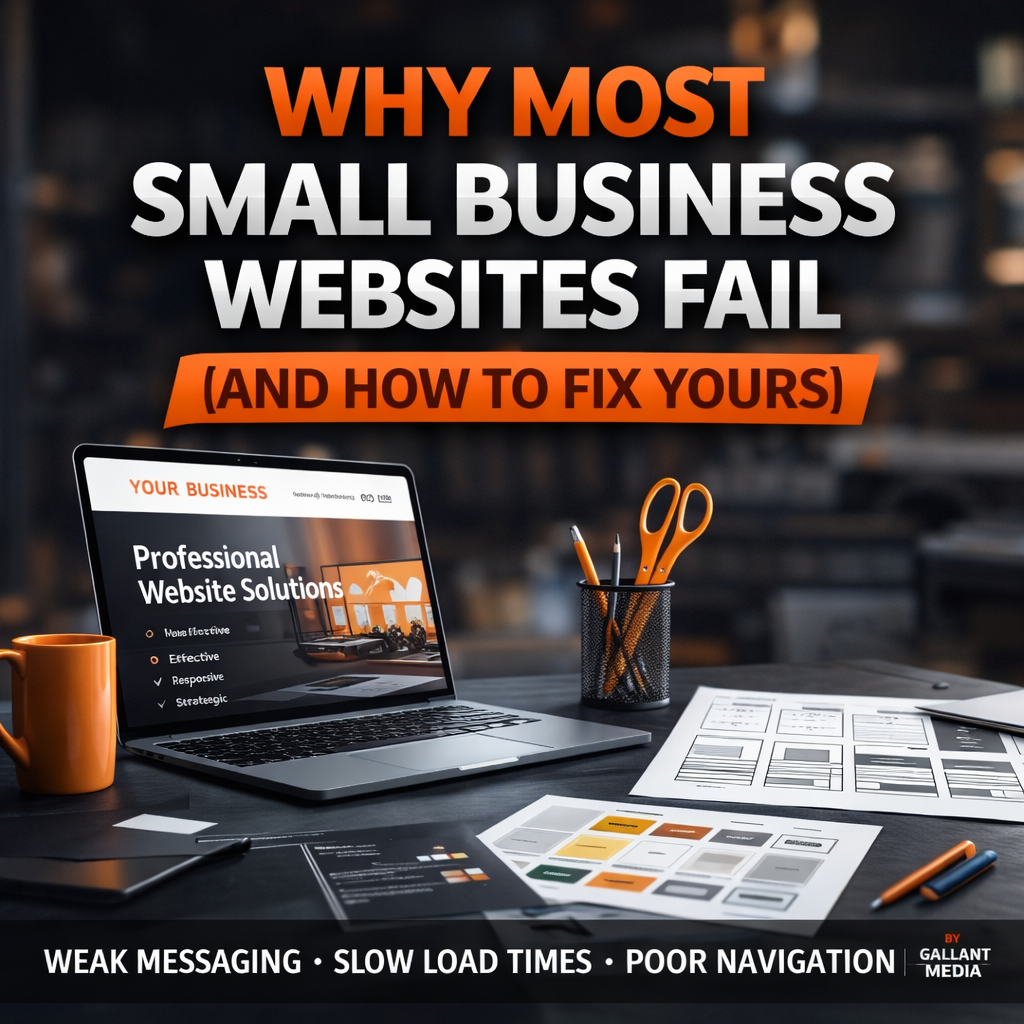
Why Most Small Business Websites Fail (And How to Fix Yours Before It Costs You Leads)
Most small business websites don’t fail because the business is bad. They fail because the website was built without strategy.
A website should attract the right people, guide them clearly, and convert interest into action. Instead, many sites quietly leak leads every day through confusing layouts, slow load times, weak messaging, and unclear calls to action.
We’ve audited hundreds of small business websites over the years, and the same problems appear again and again. The good news is that most of them are fixable without starting from scratch. This article breaks down why websites under-perform and what actually makes a site work as a lead-generation tool.
Treating a Website Like a Brochure Instead of a Sales Tool
One of the most common mistakes is building a website that simply describes the business instead of guiding the visitor.
A high-performing website answers four questions immediately:
• What do you do?
• Who is it for?
• Why should I trust you?
• What should I do next?
If those answers aren’t clear within seconds, visitors hesitate, scroll aimlessly, or leave altogether. Confusion kills conversions faster than bad design.
Weak Messaging That Focuses on the Business, Not the Customer
Many websites lead with company history, mission statements, or generic phrases like “quality service you can trust.” While well-intended, this type of messaging rarely connects.
We recommend flipping the script.
Strong website messaging:
• Leads with customer problems
• Explains outcomes, not just services
• Uses plain, confident language
• Avoids buzzwords and filler
When visitors feel understood, they stay longer and engage more.
Poor Navigation That Forces Visitors to Think
If someone has to think about where to click, you’re already losing them.
Effective navigation is:
• Simple
• Predictable
• Focused on services and outcomes
• Consistent across devices
Overloaded menus, vague page names, and buried contact information create friction. Friction leads to abandonment.
Slow Load Times That Quietly Hurt SEO and Conversions
Website speed is no longer optional.
Slow sites:
• Rank lower on Google
• Increase bounce rates
• Reduce trust
• Perform poorly on mobile
Professional WordPress development includes image optimization, clean code, proper hosting, and performance tuning. These technical details may be invisible to visitors, but their impact is massive.
Mobile Experiences That Feel Like an Afterthought
More than half of website traffic comes from mobile devices, yet many sites are still designed desktop-first.
Mobile-friendly websites:
• Load quickly on cellular networks
• Use readable text sizes
• Feature thumb-friendly buttons
• Prioritize key actions
Google indexes your mobile site first. If your mobile experience is weak, your rankings and conversions suffer.
Missing or Weak Calls to Action
A surprising number of websites never clearly ask visitors to do anything.
Every page should guide users toward:
• Booking a call
• Requesting a quote
• Filling out a form
• Visiting a key service page
Calls to action don’t need to be aggressive. They just need to be clear. If you don’t guide visitors, they won’t guide themselves.
SEO That’s Added Too Late (Or Not at All)
Search engine optimization works best when it’s built into the site from the beginning.
SEO-friendly websites include:
• Clean page structure
• Strategic headings
• Optimized metadata
• Internal linking between related pages
Content performs better when the underlying foundation is solid. No amount of blogging can fully compensate for a poorly built site.
Why DIY Website Builders Often Stall Growth
DIY platforms promise speed and simplicity, but they often introduce long-term limitations.
Common issues include:
• Bloated code
• Poor SEO structure
• Limited flexibility
• Inconsistent branding
These sites may work temporarily, but they often need to be rebuilt once a business grows or marketing efforts increase.
How a Well-Built Website Supports Everything Else You Do
Your website should support:
• Social media campaigns
• Print marketing and QR codes
• Trade shows and events
• Google and Facebook ads
• Email marketing
All roads should lead back to a site designed to convert interest into action.
How GallantMEDIA Helps Businesses Build Websites That Perform
At GallantMEDIA, we build websites with purpose. Design decisions are made strategically, not visually alone.
We help businesses with:
• WordPress website development
• Strategic website design
• SEO-friendly site structure
• Integrated branding across digital and print
• Ongoing optimization and support
If your website feels like it exists rather than performs, it may be time for a smarter approach.